

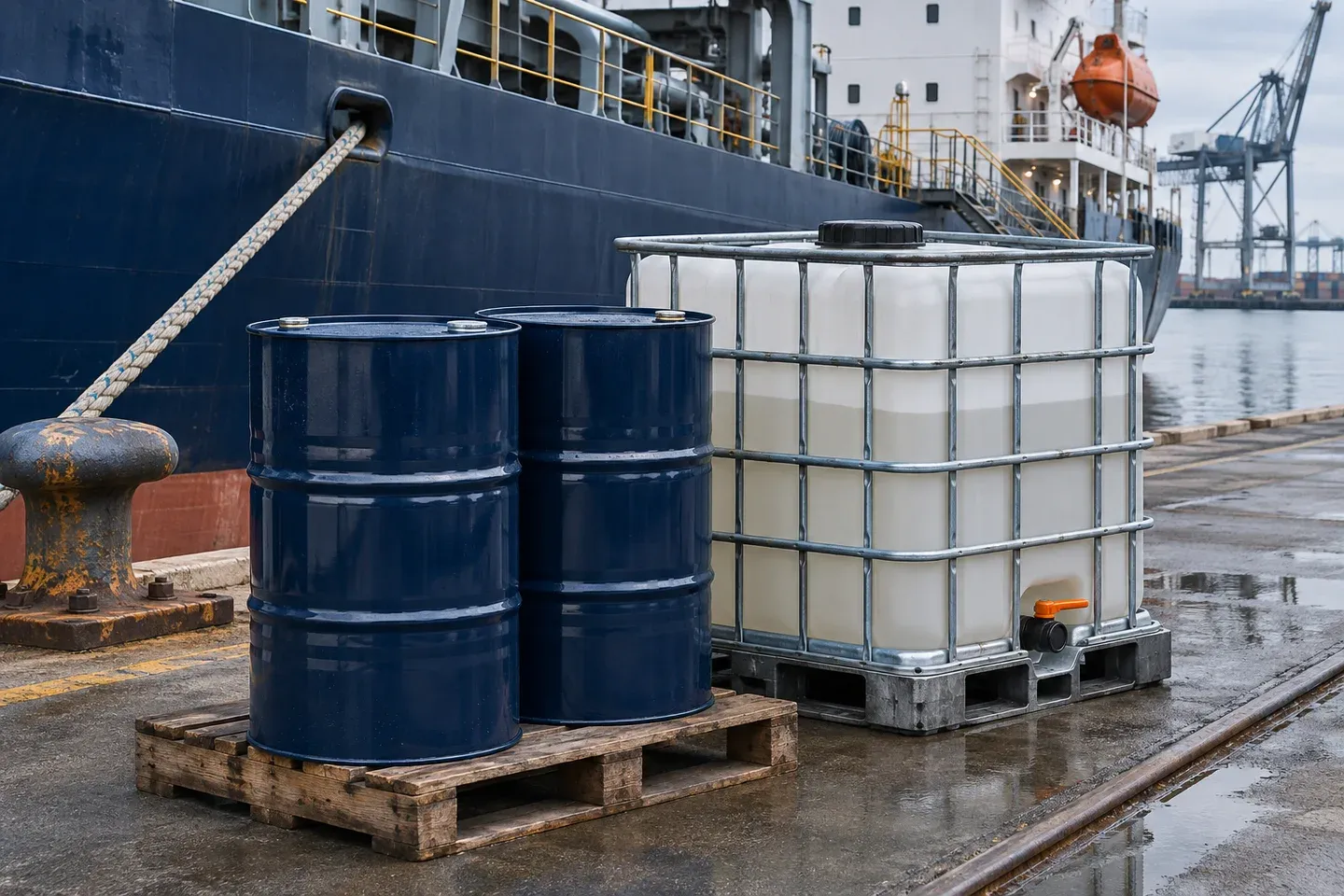
How will the ship receive the order?
Start with the product and total litres. The packaging decision follows from the berth, the vessel’s receiving arrangement and the formats the supplier can offer for that call. A quote for a particular port still needs a confirmed delivery window and a local contact who can check access.
Drums let the receiver count individual sealed packs. An intermediate bulk container, often called an IBC, puts a larger quantity in a single handling unit. A bulk delivery requires an agreed transfer arrangement. In each case, ask the receiving engineer and the agent to confirm that the proposed method works alongside.
Compare one order three ways
Consider an illustrative requirement of 1,000 litres. Five 200-litre drums give the requested total. One 1,000-litre IBC gives the same nominal volume in a different package. A bulk quote should state the quantity to transfer and any minimum delivery quantity. Ask the supplier which pack sizes are actually available.
For packaged oil, check the available handling equipment, storage space and arrangements for empty packaging. For bulk, give the supplier the receiving tank details and ask the vessel and delivery operator to agree the connection and transfer plan.
Get a comparable quotation
Request the full delivered price for each feasible option. Ask the supplier to itemise packaging, transport, access or handling charges where applicable. Record when the offer expires and who will reconfirm the berth. Purchasing can then compare the actual delivery options for this vessel’s call and send the selected arrangements to the ship.
Explore marine oil services